
Secondhand Yarn: Record Fibre, Quantity and Condition
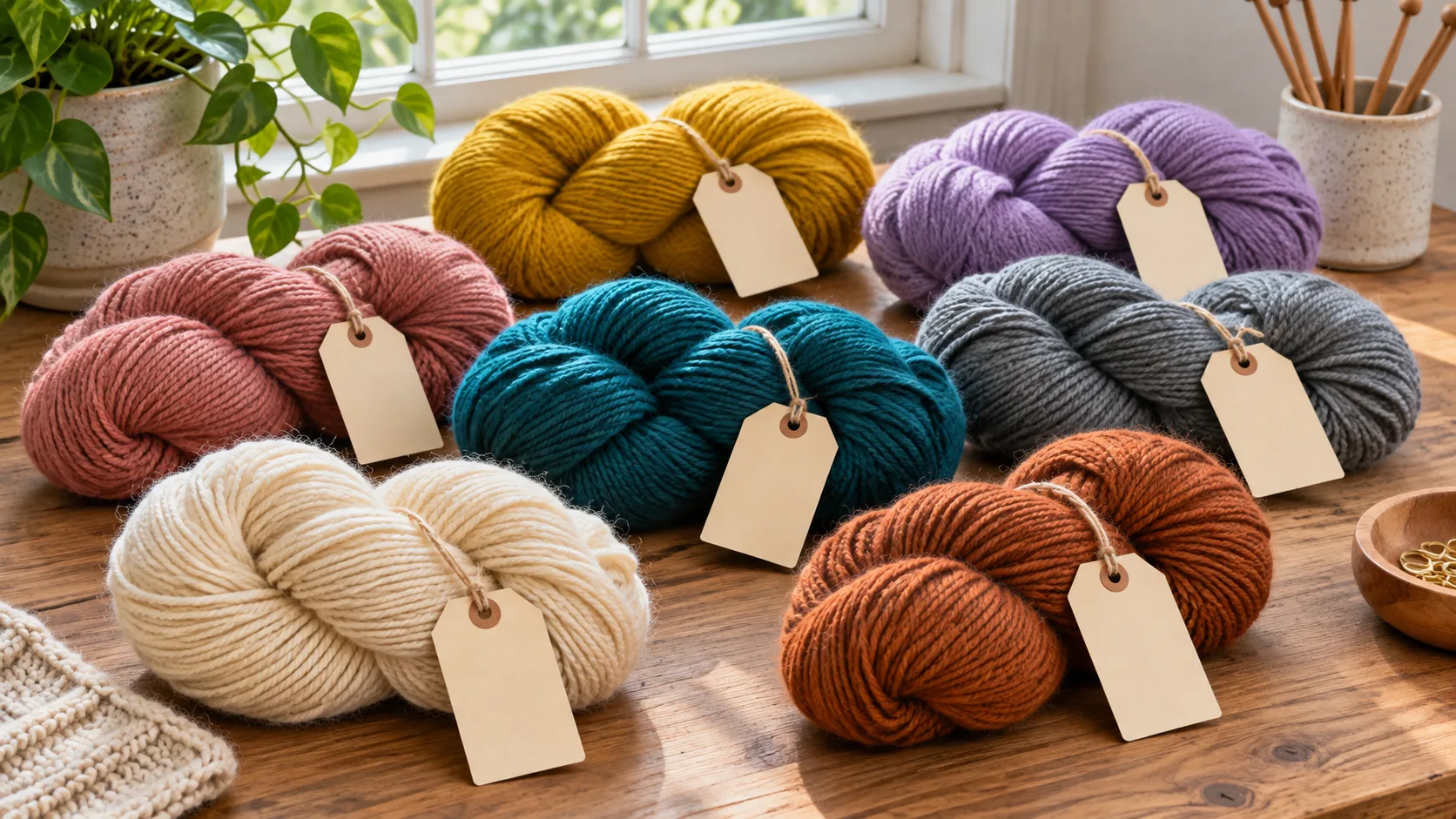
A secondhand yarn listing should tell a buyer what is actually included and which details remain unknown. Before offering a lot, separate its visible labels from your own observations and record the quantity and condition. Side Hustle Nation’s listener stories include a yarn-inventory resale example; that case does not establish a typical resale price or demand.
Identify each lot
Keep skeins with their original labels where possible. Record the label’s brand, fibre content, weight, length, colour, and dye lot only when those details are legible and correspond to the item. If a label is missing or you cannot establish that it belongs to the yarn, state that the fibre or other detail is unknown. Do not infer wool, cotton, or another fibre solely from appearance or touch.
Count full skeins separately from partial skeins. If you weigh a partial skein, state whether the packaging or label was included and use the result as an observed weight, not a precise remaining length. Describe whether the lot includes loose ends, mixed colours, or multiple dye lots.
Check condition honestly
Inspect the yarn and packaging for visible damage, tangles, stains, strong odours, or signs that storage may have affected it. If contamination or pest activity is suspected and you cannot assess it, separate the item and seek appropriate guidance rather than claiming it is ready for use. Avoid statements such as “allergy-free,” “pest-free,” or “stored in a smoke-free home” unless you have a reliable basis for that exact claim.
Do not suggest that a buyer use a particular cleaning or treatment method without knowing the fibre and the manufacturer’s care instructions. If care details are unavailable, say so. A secondhand seller may not know the whole storage history.
Show the specific items
Photograph the actual skeins, labels, and visible defects in clear light. Colour can look different across screens, so provide the label name or number if available and avoid promising an exact match to another lot. Ask permission before including a previous owner’s personal notes or identifiable information in a listing.
For a fictional lot, a seller has three labelled skeins and one unlabelled partial ball. The listing identifies the three labels, gives the partial ball’s observed weight, and marks its fibre as unknown. This example is not an appraisal or a claim about a real item.
Confirm the handover
State whether the listed price covers the entire lot or individual skeins, the delivery or collection method, and any applicable return terms. Before packing, compare the items with the description and update the buyer if a discrepancy appears. The used books condition guide covers a different item but follows the same principle: describe the specific goods rather than a generic category.