
Prepare an Item Disposition List Before a Removal Request
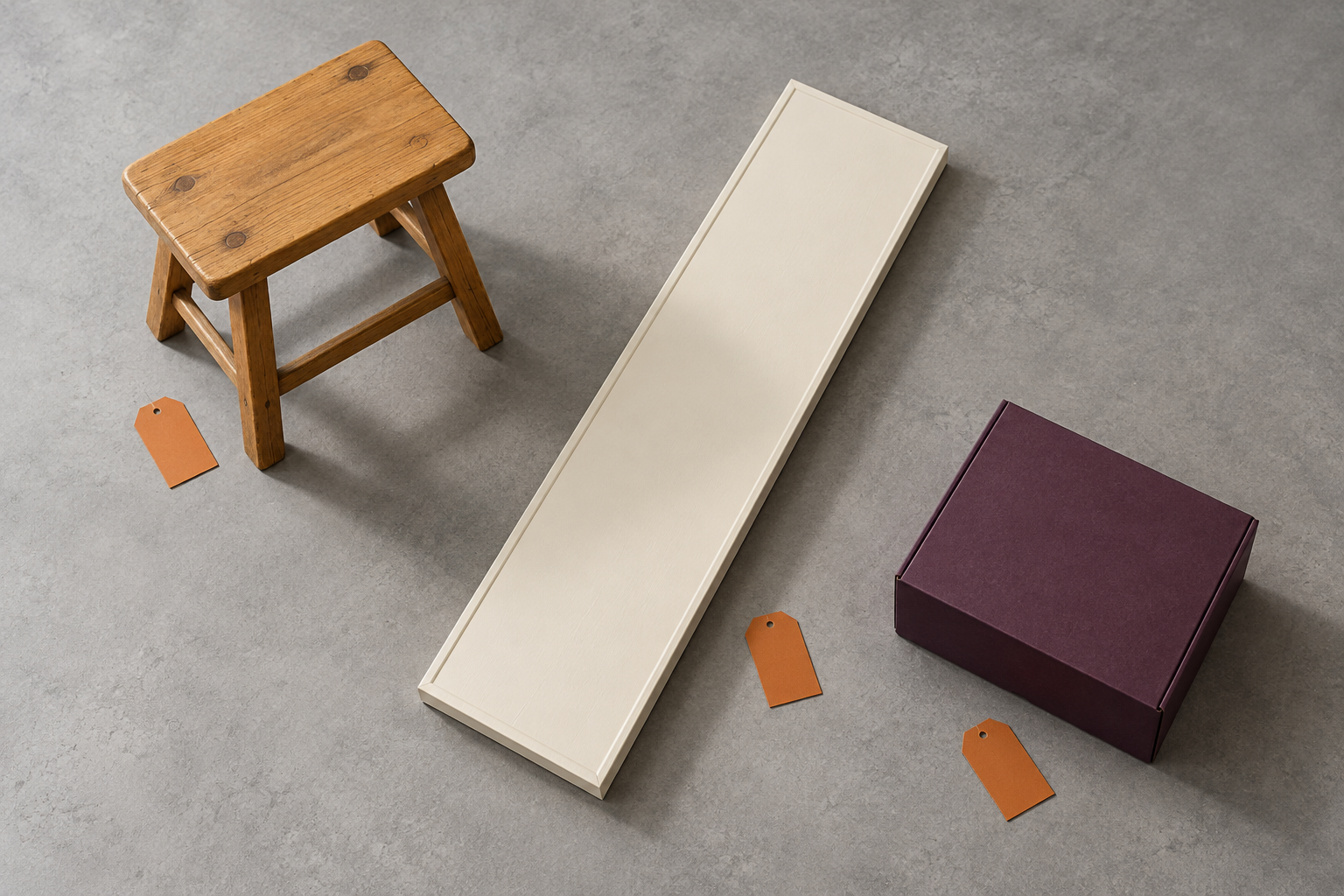
An item disposition list should show which objects the owner wants to keep, which they want to consider for reuse and which they want to discuss removing. Give each item a recognisable identity and keep the owner's decision separate from a carrier's acceptance or an actual collection. A list is not permission to handle every object in the area.
The example is an invented studio with a stool, a display panel and a sealed carton. No room has been entered, ownership checked, item handled, carrier booked or destination contacted. This guide proposes a record for reviewing decisions; it supplies no lifting, dismantling, loading, hazardous-material or disposal instructions.
Make the owner's decision visible
Start with the decision the owner is being asked to make. A heading such as “things to clear” can blur several different intentions. An owner may want an object retained in place, considered for reuse or included in a removal enquiry. Write those intentions as separate statuses rather than treating everything on the list as approved for removal.
In the fictional studio, the stool is marked “keep,” the display panel is “reuse option under discussion,” and the carton is “owner decision needed.” These are sample drafting statuses, not observations or instructions for a real property. Leave the corresponding fields blank until the actual responsible person supplies a decision.
Ask who is responsible for authorising the assignment and which items their instruction covers. The record cannot establish legal ownership or settle a disagreement about it. If authority is unclear, preserve that uncertainty and obtain the appropriate decision before treating an item as part of the request.
Identify the object without guessing its contents
Use an item identifier, the owner's supplied description, its agreed location label and a reference image if one has been authorised. A recognisable description helps separate similar objects. Do not add an assumed brand, material, dimension or condition simply because the form offers a field for it.
For the invented panel, a draft row might identify “display panel beside the studio shelf” and link to the owner's supplied image. The identifier belongs to that particular object. If the description is corrected later, keep the identity of the object clear rather than recycling the same row for something else.
The sealed carton shows why an unknown can be important. Label its contents as not supplied; do not open it merely to make the sample inventory more complete. This document offers no authority to inspect possessions or assess how an unidentified item should be handled.
Keep unrelated personal material out of reference photographs and ordinary copies of the list. A private address or access instruction belongs in the owner's agreed restricted channel, not beside every item description. The list should expose the decision, not collect credentials.
Review a correction against the right row
Google Docs suggestions allow proposed wording changes to be accepted or rejected. Use that mechanism to review a correction against the affected item row. Accepting a text edit does not establish collection authority, transfer an item or confirm that a receiving organisation will accept it.
Suppose the fictional owner changes the panel from “reuse option under discussion” to “keep.” The draft should make that changed disposition visible. Do not leave the panel in a separate removal enquiry simply because the main list has been edited.
If a photo label and an item description conflict, ask which one identifies the intended object. A polished spreadsheet can still contain the wrong association. Preserve the unanswered question instead of choosing the interpretation that makes the list look finished.
The errand pickup sheet handles a different exchange: collecting a specifically requested order. An item disposition list first establishes what the owner intends to happen to objects already in an area. These two records should not be treated as interchangeable authorisations.
Explain any grouping map in words
The W3C complex-image guidance describes providing a fuller text explanation of information carried by a complex visual. If the draft includes an item-location sketch, explain the relevant item identifiers and grouping relationships in text rather than relying on coloured outlines alone.
For the fictional studio, the description can say that the stool remains outside the proposed enquiry group and that the carton is awaiting a decision. It must match the actual draft sketch. Do not add routes, measurements or access permissions that the owner has not supplied.
A grouping map is not a physical handling plan. It does not assess access, traffic, loading or the suitability of a real object for a particular action. Those questions need the actual responsible parties and appropriate information; an inventory diagram cannot answer them by looking complete.
Keep a destination proposal separate from acceptance
If the owner wants to explore reuse, record the proposed next question and who will ask it. A named destination on a draft is not an acceptance. Do not promise that an organisation, buyer, recipient or carrier will take an item without the actual confirmation needed for that arrangement.
The panel example can have an unresolved destination question while its owner decision is also under review. Those are separate dependencies. A reply about possible acceptance would not override a later owner instruction to keep the panel.
Avoid inserting a collection price, eligibility rule or disposal route into this fictional example. A real enquiry needs current information from the relevant provider and the people responsible for the assignment. The proposed list helps them see what must be confirmed; it does not supply the missing answer.
For an authorised real handover, connect any collection record with the item identifiers and what actually happened. “Enquiry sent,” “accepted for collection” and “collected” describe different events. The order packing handover guide also separates preparation from actual fulfilment, though its packing task has a different scope.
Finish with a partial list when the decisions are partial
Close the review copy with the items whose disposition is settled, those still awaiting an owner decision and the provider or recipient questions still open. Do not mark the entire room cleared because one row has an answer.
If someone later reports a collection, record the actual result against the specific item. An attempted visit is different from an item leaving the site, and neither by itself proves acceptance at a proposed destination. This example claims none of those events.
Have the responsible reader test the draft by pointing to the object and naming its current status. If they cannot distinguish “keep” from “awaiting decision,” clarify the labels before any real request is made. An honest incomplete list is more useful than a complete-looking instruction built from assumptions.