
Pet Sitting as a Side Hustle: Plan the Visit, Booking and Costs
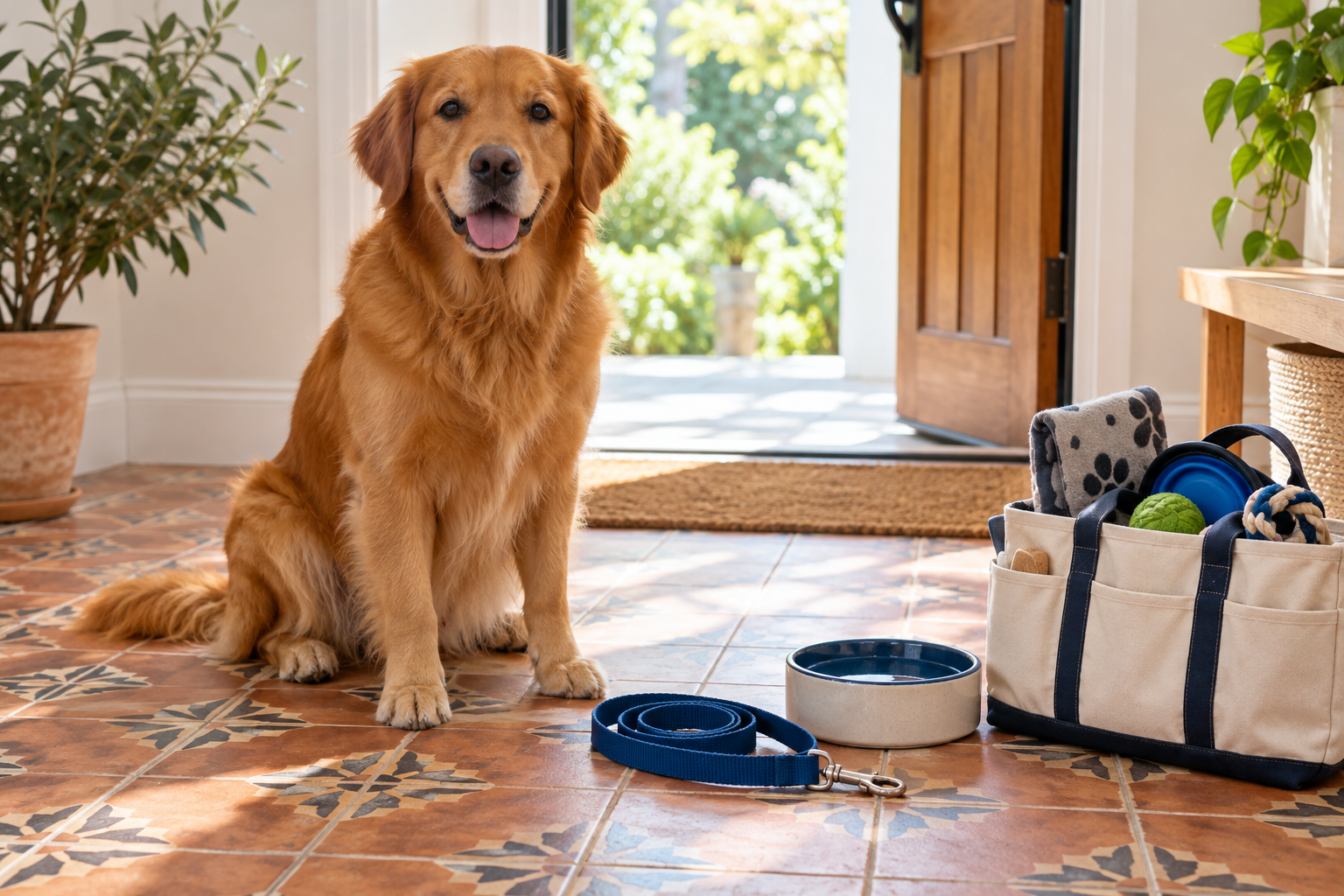
Pet sitting is scheduled care with a real animal and an owner relying on you. Choose the service you can safely deliver, agree on the duties and timing, meet the pet before committing and count travel, preparation and follow-up as part of the job. A nightly price is not a measure of pay for every hour involved.
This guide uses Rover's public information to explain one booking route and an editorial checklist for planning the work. Local permissions and the needs of a particular pet require their own assessment.
Choose a service you can deliver consistently
Rover's sitter page lets providers set availability, prices and pet preferences, with choices including boarding, house sitting, drop-in visits, day care and walking. Profile approval comes before receiving work through the platform. A service being listed does not establish that a person, home or animal is a suitable match.
Source: Rover's sitter information. Checked 2026-10-26.
Start with the practical difference between the services. A drop-in visit involves a trip and an agreed set of tasks. A walk needs a suitable route and handover. Boarding uses your own space, while house sitting uses the owner's home. These commitments do not become interchangeable because they are offered through one profile.
For your own planning, write down the days, travel area and duties you can actually cover. Include existing work, family obligations and other animals in your care. If two bookings would require you to be in different places at the same time, a fuller calendar is not necessarily a better business.
Meet the owner and pet before booking
Rover's booking guide tells sitters to review the request and pet profile and arrange a Meet & Greet before booking. Its process separates a pending request from an upcoming booking. Treat a message about dates as a conversation until the actual booking is confirmed in the platform.
Source: Rover's booking workflow. Checked 2026-10-26.
Use the meeting to understand the agreed care, not merely to exchange a key. As an editorial checklist, discuss feeding, exercise, access, behavior around other animals and how the owner wants updates. Ask who can be contacted if plans change and how an urgent concern should be handled. Do not promise a level of care or a task that is outside your ability.
For a walk, clarify where the handover happens and whether the pet needs equipment supplied by the owner. For a visit, identify the tasks and what counts as completion. For a stay, discuss the real arrival and departure times rather than treating a night as a precise description of attendance.
If a material condition is unclear, resolve it before accepting. A calendar gap does not require you to accept a poor match. This is a preparation checklist, not veterinary or behavior advice for a particular animal.
Count the whole appointment
A visit's advertised duration may be only part of the time it uses. Add travel in both directions, access and handover, preparation, agreed updates and any cleaning or recordkeeping that the service requires. For consecutive jobs, check the actual route and enough room for delays rather than assuming every minute can be sold twice.
Consider an explicitly hypothetical drop-in: 30 minutes of care, 15 minutes traveling each way and 10 minutes for access and an update uses 70 minutes. The example describes a scheduling calculation, not a Rover requirement or a result Fovza observed. A different route or care plan changes the total.
Use a time record for each completed appointment. It can show whether the travel area is too broad or the task description leaves out recurring work. Do not use one smooth visit to forecast every future booking, particularly when the pet, location or service changes.
Read the actual service fee and protection terms
Rover's US help page lists a 20% provider service fee, while noting different California rules and a US pilot with different fees. It also says fees can vary by country. Confirm the schedule that applies to your own account instead of applying one percentage to every location.
The same page describes the Rover Guarantee as a reimbursement program primarily intended to protect pets. That wording should not be treated as proof that every cost or incident is covered. Read its applicable terms separately from any insurance or permission you may need.
Source: Rover service fees and exceptions. Checked 2026-10-26.
Build your own calculation from the booking price and the actual deduction. Then account for travel, consumable supplies, cleaning, equipment and other applicable operating costs. Include the full appointment time from the previous step. Money left after a platform deduction still has other costs attached to it.
Before offering care in your own home or someone else's property, check the permissions that apply to that arrangement. This guide has not checked a lease, local registration, insurer or protection claim for a reader. Keep those unresolved questions out of any promise to an owner.
Make the care plan easy to follow
Keep the agreed instructions accessible while protecting the owner's personal information. Separate arrival details, care tasks and contact instructions so an important item does not disappear inside a long message thread. Follow the agreed routine and record what was completed; do not invent a completed walk or visit because a reminder appeared in an app.
For an editorial record template, use fields for the booking reference, planned time, actual arrival and departure, completed duties and any issue requiring follow-up. An update should be factual and relevant. Avoid sharing an owner's address, access instructions or photographs beyond the permission given.
If a situation changes, communicate through the agreed route and follow the applicable support process. Do not quietly substitute a different service or another person. Any change in responsibility, schedule or price needs to be understood before treating it as settled.
Check recurring bookings before counting next week's income
Rover's U.S. recurring services repeat weekly for dog walking, day care and drop-in visits. The recurring-service guide says ending that arrangement stops future bookings from being generated, while the current week's booking remains scheduled. If a particular walk or visit will not happen, check and cancel that individual service as well; ending the repeating schedule alone does not remove the current week.
The recurring-payment guide requires a Rover Card on the day of service and lists Tuesday of the following week as the payment schedule. If a card was missed, the app can show the service as Incomplete; use its Review step to report whether care was actually provided. A calendar entry is no evidence that a visit happened, and the published payment schedule is not confirmation of money arriving in your bank.
Recurring rates are based on the initial booking. Changing your profile prices, or reaching a holiday, does not automatically change that existing arrangement. Review the booking price with the owner before relying on a higher rate. These services also have a same-day cancellation policy that cannot be customized, so a repeating client should not be counted as guaranteed weekly revenue.
These U.S. recurring-service rules were checked November 14, 2026. Keep a record of each scheduled visit, the care actually delivered and the payment received.
Review a completed booking before expanding
After a job, compare the agreed duties with the work performed, the full time used and the money actually received after costs. Keep a cancellation, an unconfirmed request and a completed paid booking separate in that record. A request for future dates is not a completed result.
Decide which constraint would become harder with another booking: travel, space, care complexity or your ability to communicate reliably. A narrower service area or fewer service types may fit your schedule better than accepting every request. The right next step depends on what your own record shows, not a platform's headline earnings example.
For other kinds of local and remote work, the earning-routes guide compares the steps between an available opportunity and money received. Pet care belongs in that operating-work comparison; it is not an automatic reward for keeping an app installed.