
How to Start a Pet Waste Removal Business: Routes, Quotes and First Customers
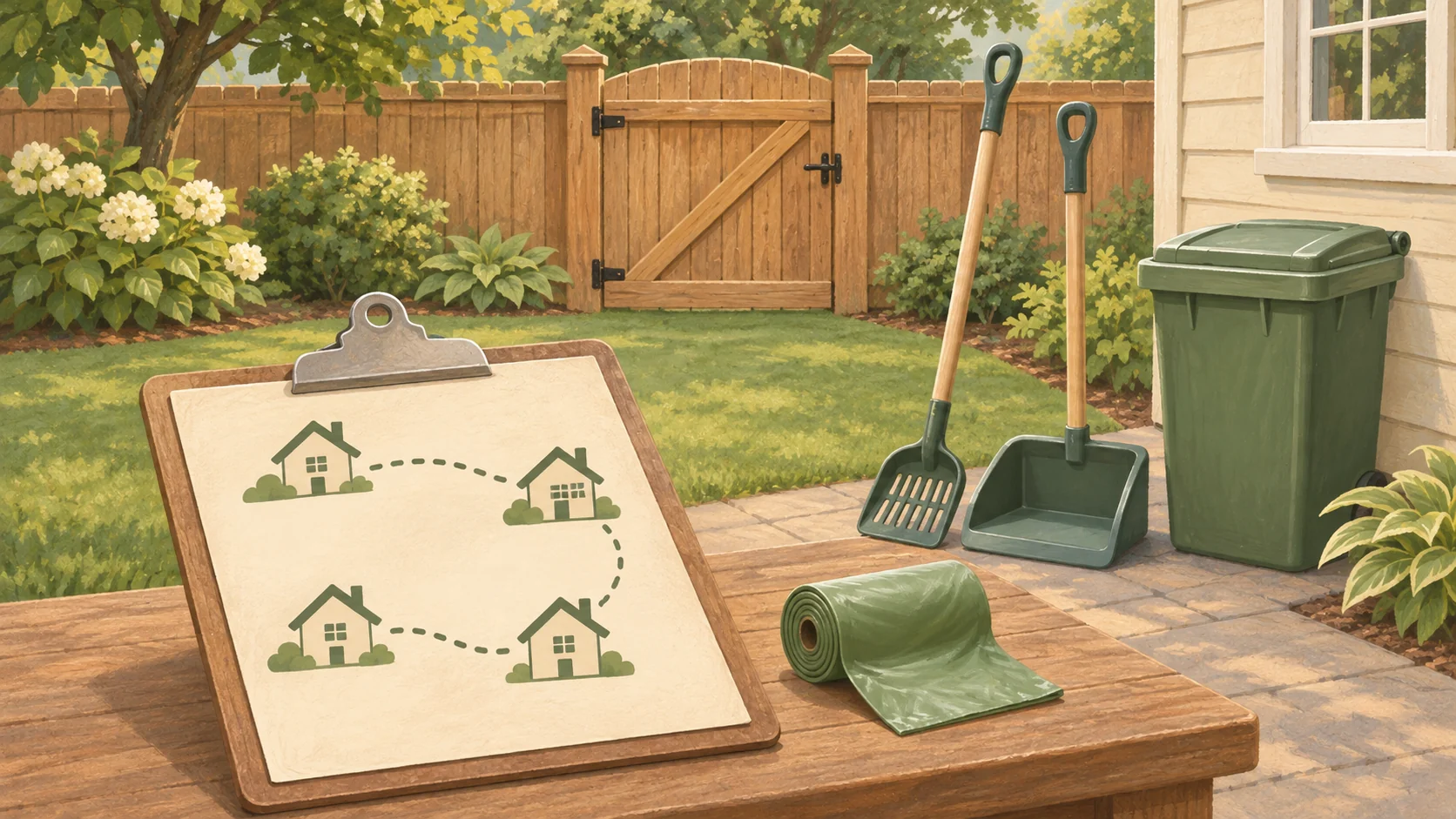
Start a pet waste removal business by defining a small service area, agreeing what happens to the collected waste, and costing a complete route before accepting bookings. Separate the initial cleanup from recurring maintenance. Your first offer should explain property access, the work included, the price and what happens when a visit cannot go ahead.
A yard that takes little time to clean can still be an expensive stop. Driving, a locked gate, equipment cleanup and a separate disposal journey all belong in the decision. Build the service around work you can deliver repeatedly, then use completed visits to improve the next quote.
Define the pet waste removal service before buying equipment
Choose the customer and property type you can serve: individual household yards, for example. A shared dog area at an apartment building raises different questions about authority, access and reporting. Give that work a separate assessment rather than extending a household quote automatically.
Ask about the number of dogs, the areas included, the last cleanup and anything that limits access or visibility. A first visit after a long backlog needs its own estimate. A recurring price should state the starting condition it assumes and how you will handle a larger cleanup.
The endpoint matters as much as the collection. Does the customer receive a cleaned yard with bagged material left in an agreed receptacle, or does the service include taking the material away?
Swoop Scoop's official FAQ, checked November 17, 2026, shows how specific that distinction can be. Its location sections describe these arrangements:
| Published company example | Waste endpoint described in the FAQ |
|---|---|
| Seattle | Double-bagged waste stays in the customer's trash bin. |
| Spokane subscription | Collected waste is taken away after regular cleaning. |
| Spokane one-time cleanup | Taking waste away is excluded. |
| North Idaho | Take-away service is described for subscribers, with one-time cleanups excluded. |
Those are examples from one operator. Write your own agreed endpoint into the quote, including who provides the receptacle and what happens if it is unavailable.
Keep animal care separate. The pet-sitting booking guide addresses feeding, supervision and other care arrangements. A yard-cleaning visit should have an explicit scope if the customer also wants those duties.
Set the access and disposal arrangements
Before accepting responsibility for a property, complete a short service record. A customer agreeing to a price does not settle every operational question.
| Decision | What to establish |
|---|---|
| Authority and access | Who authorizes entry, which gate is used, and how will you get access without publishing a code or other private instructions? |
| Dogs and people | How will the agreed work area be kept accessible and safe during the visit? |
| Yard boundary | Which surfaces and areas are included, and which materials or conditions need another assessment? |
| Collection endpoint | Which customer receptacle or receiving arrangement has been agreed? |
| Off-site handling | Who transports the material, who accepts it and what confirmed charges or requirements apply? |
| Interrupted visit | How are a locked gate, obstructed area, unavailable bin or unsafe condition reported and resolved? |
| Completion | What record does the customer receive, and how can they flag a missed area? |
The EPA's pet-waste management fact sheet describes how runoff can carry waste into waterways. It discusses municipal management and notes that state or local requirements may apply.
Use the relevant local authority and receiving service to confirm the arrangement for the work you intend to sell. A general environmental fact sheet does not establish a commercial collection or transport permission. Keep an unresolved take-away service outside the accepted scope until the endpoint and responsibilities are clear.
Work out the cost of a complete route
Draw the route from departure to return. Include the first journey, the gaps between properties and any receiving stop. Then add time for preparation, equipment care, messages and records. A compact service area helps you compare like with like when the first bookings arrive.
Use this worksheet with your own estimates, supplier quotes and later visit records. Keep the evidence beside the figure so you can see what needs replacing after a real service day.
| Worksheet line | What to record and check |
|---|---|
| Work at properties | Estimate time for each included area from the yard information and agreed starting condition. |
| Travel | Record complete journey time and travel expense, including departure and return. |
| Setup and equipment care | Allow time and materials outside the yard, following equipment instructions and your working procedure. |
| Administration | Include the messages, scheduling, payment and records needed for a booking. |
| Supplies and receiving costs | Use current supplier prices and the charges for an agreed receiving arrangement. |
| Shared business costs | Allocate documented equipment, coverage and other overhead costs consistently. |
| Proposed customer price | Show the initial cleanup and recurring service separately, with the accepted scope and terms. |
| Owner time | Total every time line above, counting each activity once. |
For a basic planning check, subtract route expenses and your allocation of shared costs from the amount you expect to collect. Compare the remainder with the total time committed. If you also deduct a chosen allowance for your own work, identify it separately so you do not count that allowance twice.
A quote remains an estimate. After each service day, replace estimated time and spending with the actual records. Keep quoted work, completed work, invoiced amounts and money received distinguishable. This makes a late payment or an unsuccessful visit visible without treating it as collected income.
When another customer asks for a stop outside the existing area, recalculate the whole route. The extra booking may change the return journey or force a narrow appointment window. Consider offering a different route day before accepting a promise that makes the rest of the schedule difficult.
Prepare equipment for the agreed work
Start with a task list before a shopping list. It should cover collecting material from the agreed surfaces, containing it, protecting clothing and hands, caring for equipment between properties, and leaving the access point secure.
Choose equipment and supplies against their instructions and the conditions you plan to handle. Include replacement bags and consumables in the cost record. Decide how equipment and collected material will be kept separate from other items during travel. Any use of cleaning products needs to follow the product's directions, including surface suitability and handling instructions.
Build a completion routine that is easy to repeat: inspect the agreed area, confirm the waste endpoint, secure the gate and send the promised record. If you use a photograph, agree what it should show and keep unrelated people, home interiors and access details outside it.
Treat unfamiliar material, an aggressive animal or an inaccessible area as a reason to stop and contact the customer. A broad promise to clean everything creates work you have not assessed or priced.
Find the first customers inside the service area
Publish a clear local offer before spending money on advertising. State the area served, property type, available frequency and how to request an estimate. Explain whether the first cleanup is assessed separately and how waste is handled. A prospective customer should be able to tell whether their property fits before sending personal details.
Begin with channels where you have permission to introduce the service: your existing local contacts, relevant community listings or neighborhood groups that allow business posts. Ask a potential referral partner, such as a pet-care business, whether they accept a service information sheet. Keep any recommendation or referral arrangement accurate and transparent.
Use an enquiry record rather than counting every message as demand. Record the general area, requested frequency, property fit and reason an enquiry did or did not become an accepted booking. Store private access information separately from marketing notes.
An enquiry outside the route can be useful evidence for a later service day. It is not a reason to promise immediate coverage. Give the customer an honest answer about the area and schedule you can currently serve.
If you try paid promotion, choose a budget you can review and track the path from enquiry to accepted work to payment received. Include the time spent replying and quoting. Change the offer or service area from those records; a high message count alone does not show that the route pays for its costs.
Make recurring visits and billing understandable
A subscription commits you to future visits. Set out the service frequency, how billing relates to that schedule, the initial cleanup arrangement, and what happens during a customer pause, weather disruption or blocked visit. Make the cancellation and notice terms available before taking recurring payment.
Swoop Scoop's FAQ says it optimizes routes for driving time and does not provide arrival times. That illustrates a scheduling choice. If you promise a narrower window, allow for it when you cost your own route.
Avoid letting the next invoice become the first explanation of a changed service. Confirm changes to the property, frequency or waste endpoint before applying a revised price. Keep the accepted version with the booking record so both sides can refer to the same scope.
Start with a schedule small enough to review after completed visits. Compare planned and actual time, note access failures, and check whether the recurring price still fits the maintained condition. Expand only when the route and customer promises can support the additional work.
Decide whether to accept the first booking
You are ready to make a definite offer when you can describe the property, collection endpoint, full route, price and interruption procedure. If one item remains open, identify it in a provisional estimate and resolve it before accepting responsibility for that part of the work.
For comparison with other local services, see the earning-routes overview. The litter-pickup scope guide addresses a different service category; assess the materials and responsibilities for each job individually.
Sources
- Side Hustle Nation's pet-waste removal business case study: matching business topic covering customer acquisition, route economics, recurring billing and operations.
- Swoop Scoop's policies and FAQ: location-specific service endpoints and its published scheduling approach.
- EPA, Pet Waste Management, February 2023: runoff and municipal management context.
Sources checked November 17, 2026. Company descriptions apply to that provider's published service. Local operating and receiving arrangements need to be confirmed for the proposed business.