How to Plan a Custom Pet Portrait Commission
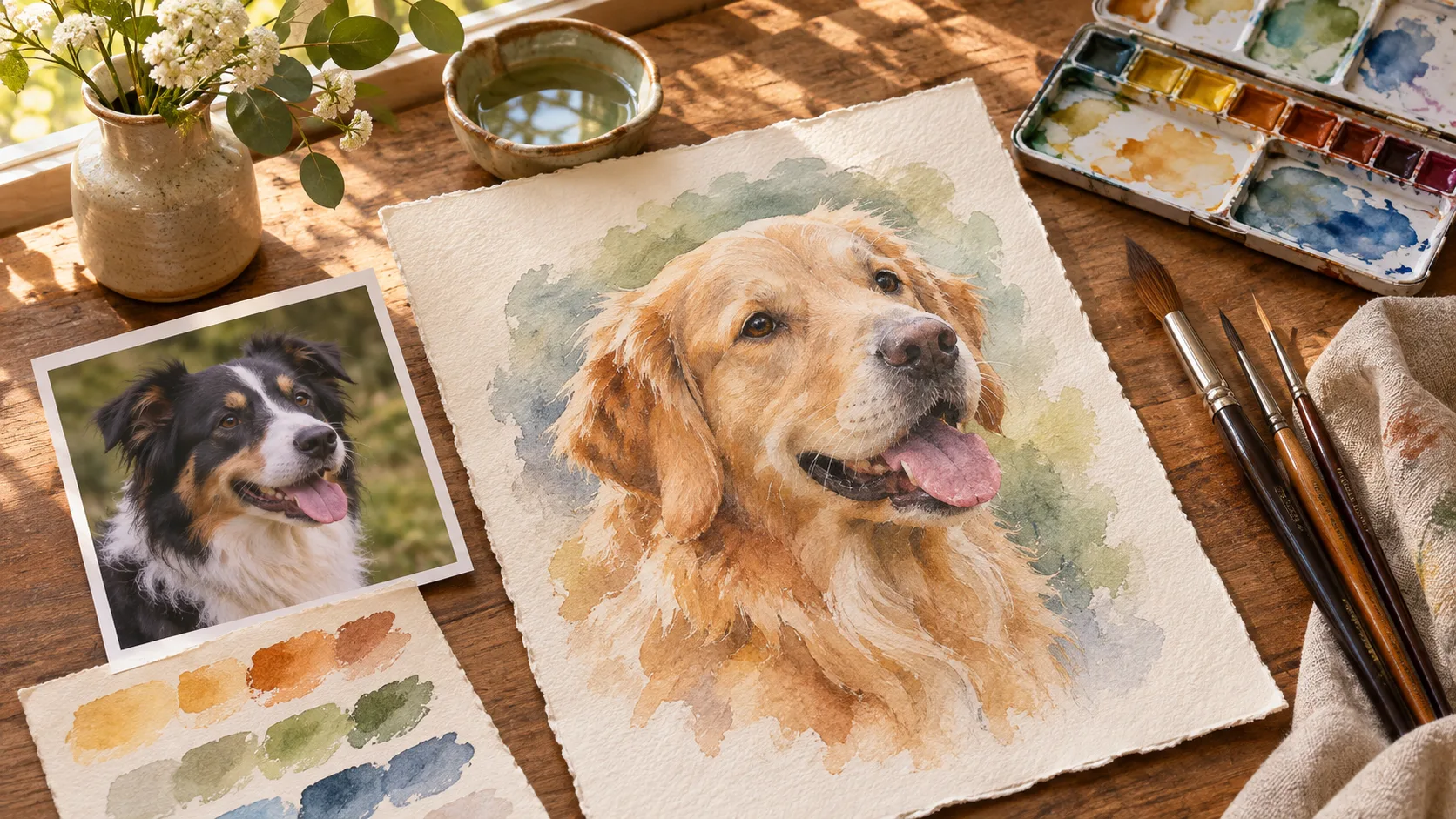
A pet portrait commission turns a customer's reference images into a one-off piece of artwork. The artist's decisions start before the first brushstroke: which photograph is usable, what the finished work includes, and how the customer can review it. Side Hustle Nation has profiled an artist making custom pet portraits, illustrating one way the service can work; that account is an example, not a promise of demand or income. Source
Decide what you can actually deliver
Choose a medium you can work in consistently, such as watercolor, pencil, or digital painting. Prepare sample pieces that show your own approach to fur, eyes, backgrounds, and multiple animals. State whether the customer receives a physical original, a digital file, or both. A physical painting and a printable digital file have different production and delivery steps.
Start with a manageable offer: one animal, one size or file format, and a simple background. Add more complex options only after you have practiced them. Keep a record of your actual time and materials on sample projects; use those observations when deciding whether a proposed commission is worthwhile.
Ask for references that answer visual questions
Request several clear photographs showing the animal's face, markings, and coloring. Ask which image should guide the pose and whether there are details, such as a collar or a distinctive patch, that matter to the customer. A photograph taken in uneven light may make color hard to judge; ask for another view instead of guessing.
Check that the customer is entitled to provide the images for the intended use. Discuss permission separately before using a finished portrait or its reference photographs in your portfolio. Do not assume that paying for a commission automatically grants either party every possible use.
Write the brief before accepting
A useful written brief records the subject, medium, dimensions, background, delivery format, proposed completion date, total price, payment schedule, and shipping arrangements where applicable. Explain what happens if the reference images are insufficient, if the customer changes the subject after work begins, or if either party needs to cancel. Confirm the number and timing of review opportunities before starting.
Fictional example: A customer requests a watercolor of one dog against a plain background. The artist agrees to share a composition sketch before painting; changing the pose after the sketch is approved requires a new discussion. The agreement specifies whether a frame is included and who handles shipping. This example illustrates a possible scope, not a standard contract.
Review, finish, and hand over
Use the agreed sketch stage to resolve pose and composition. Tell the customer what feedback is useful at that stage and what is harder to change later. For digital work, confirm the file type and intended dimensions. For physical work, protect the finished piece during packing and retain the shipment details if tracking is available.
Keep the approved brief and final delivery record together. If the customer also needs practical help caring for an animal, our pet sitting guide covers a separate service with its own responsibilities.
What should a beginner avoid promising?
Avoid a deadline you have not tested, an exact likeness from an unclear reference, or unrestricted image rights without an explicit agreement. Start with a scope you can explain, practice it on your own samples, and review local business and tax requirements for your circumstances before accepting paid work.