
Paper Map Workshop: Prepare an Introductory Lesson
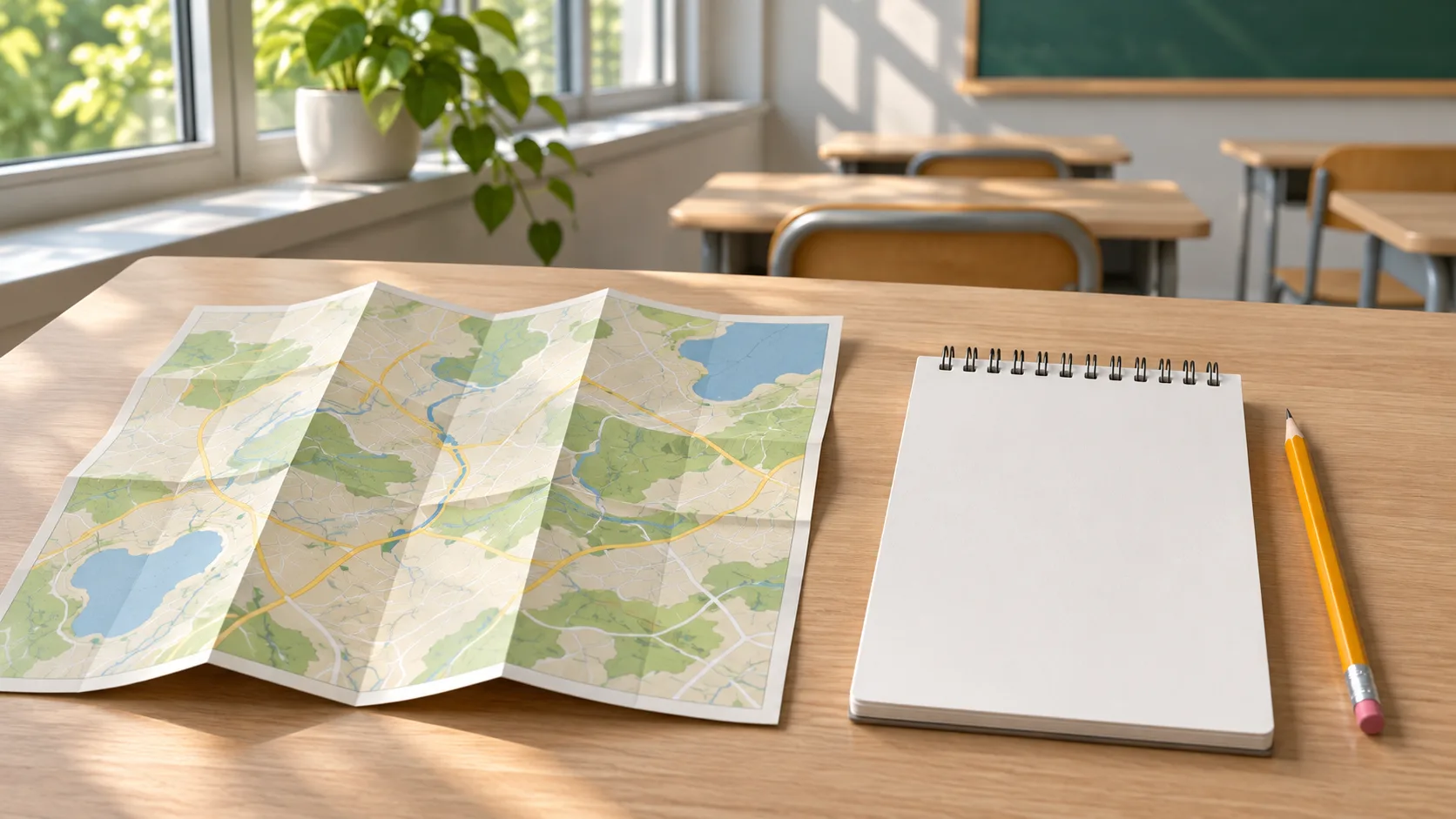
A paper map workshop can introduce participants to reading a map’s title, legend, scale, and orientation in a supervised learning setting. Before advertising a class, define the audience, the map and materials, and what the session will and will not teach. Side Hustle Nation mentions paper-map reading as a possible course subject; the idea does not establish a curriculum, qualification, or likely income.
Define the learning task
Ask the organizer about participants’ ages, familiarity with maps, group size, and accessibility needs. Choose a limited objective, such as finding the legend and identifying the meaning of selected symbols on a specific practice map. A short introductory session should not be represented as navigation or wilderness-safety training.
Use a map whose provenance, publication date, scale, and permitted use can be checked. Explain that map symbols and presentation can differ between publishers and editions. Do not assume a practice map reflects current road closures, terrain, access restrictions, or emergency conditions.
Prepare the exercise
Select a few locations and questions that can be answered from the chosen map. Check the answer key against that same edition, and identify ambiguous questions before the session. If a map lacks a feature needed for the exercise, change the question rather than inventing an answer.
For a fictional classroom exercise, the instructor asks participants to find the map title and locate the key that explains a park symbol. The instructor provides the map and checks that the symbol appears in that edition. This is a planning example, not a real map or a route recommendation.
Agree on practical arrangements
Confirm the venue or online platform, duration, materials, equipment, fee or quotation, and who will supervise any children. Clarify whether participants may keep a copy of the map or worksheet. Review the map publisher’s license before reproducing or distributing it; finding a map online does not automatically grant permission to copy it.
Provide accessible alternatives where practical, such as a larger print version when the license allows it, or verbal descriptions of the exercise. If a participant needs navigation advice for an actual trip, refer them to current authoritative resources and appropriately qualified instruction for that setting.
Close with a review
Ask participants to explain where they found an answer rather than merely confirming that it was correct. Record any unclear instruction and update the worksheet before the next class. Do not promise that attending the workshop prepares someone to navigate an unfamiliar route independently.
The craft workshop preparation guide covers a different activity but includes related questions about materials and participant arrangements.