
Clothing Alterations: Define the Request Before Changing a Garment
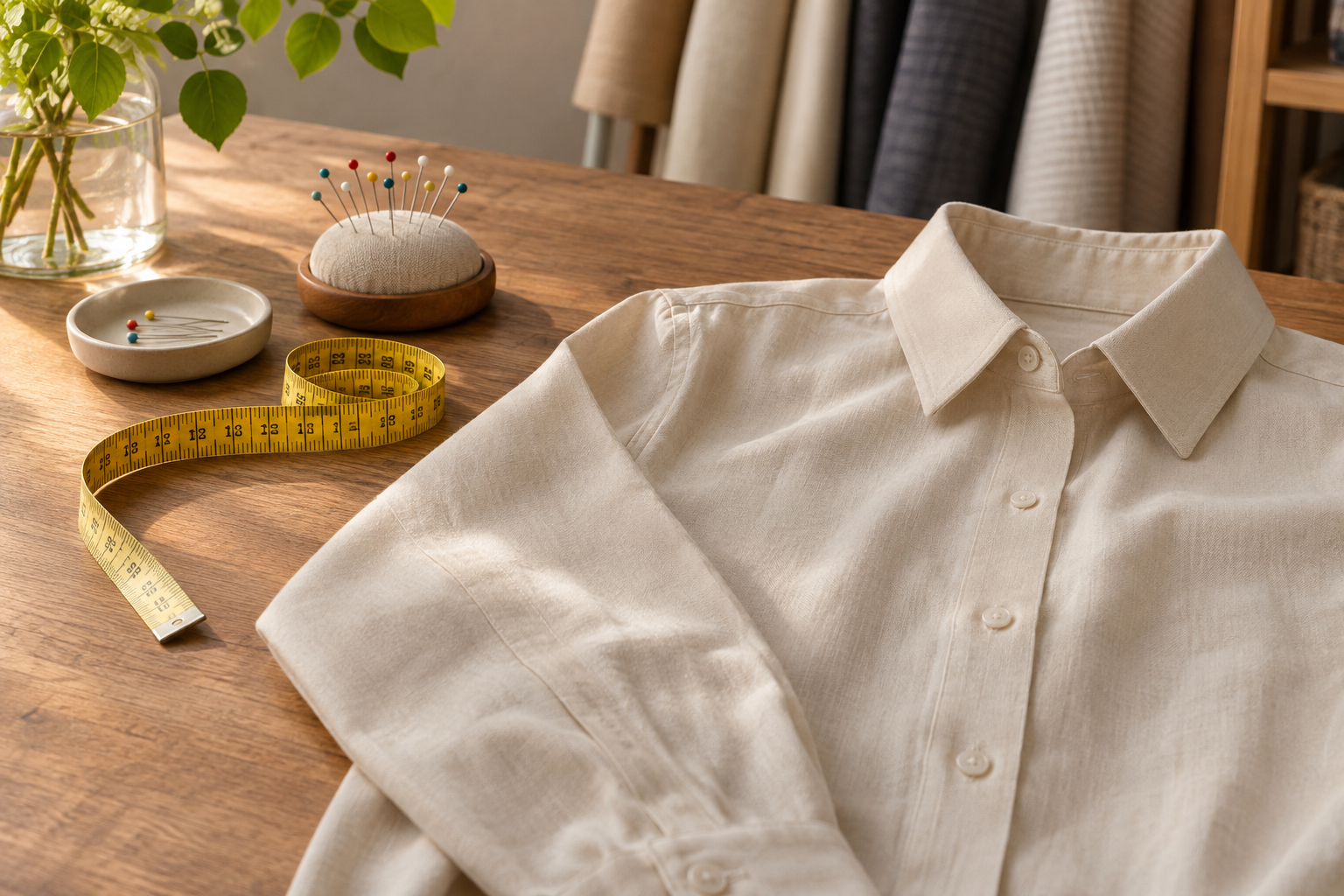
An alteration begins with a clear description of the garment and the change the customer wants. Record the garment's existing condition, agree on fitting and timing, and obtain approval before cutting or making another irreversible change. A fitting or quote alone does not guarantee a particular fit.
Identify the garment and the intended change
Ask the customer which item needs work and what they want to be different. A request to shorten trousers, for example, should identify the intended length and whether both legs need the same change. Don't infer the desired result from a general request to “make it fit.”
For a fictional customer who wants a shirt sleeve shortened, the service provider might discuss the preferred length and whether the cuff's construction limits the available options. This is a planning example, not a real garment or completed alteration.
Check the garment together
With the owner's agreement, note visible wear, marks, loose seams and any special construction relevant to the request. Read the garment's care information where available, but don't assume it answers every question about alteration. If a material or construction is outside your competence, explain the limit and decline or suggest an appropriate specialist.
Discuss whether a fitting is needed, who will place temporary marks and when the customer should review them. Protect the customer's privacy during fittings and agree how measurements or photos, if necessary, will be handled.
Separate the quote from approval
Describe the proposed work, any uncertainty and how the price and timing will be confirmed. If inspection reveals an additional issue, contact the customer before adding work or changing the agreed cost. A quote does not authorize an unapproved cut or an unrelated repair.
Explain what can and cannot be undone. Fabric, seam allowance, prior alterations and the garment's construction may limit the options; don't promise an outcome before examining the item. Decide who is responsible for supplying any agreed replacement materials.
Record the handover
Give the customer a way to identify the item and the agreed request. At collection, describe what was completed and identify any work left outstanding. Agree on how the customer can raise a concern about the work without promising a result you cannot verify.
Side Hustle Nation includes clothing alterations in a list of service ideas. The list supports the topic only; it does not establish our experience, current demand or a typical price. The laundry care enquiry guide addresses a different task: gathering information for cleaning rather than changing a garment.