
Aquarium Maintenance Service: Agree on the Handover Before a Visit
An aquarium maintenance visit involves living animals, equipment, and a client’s premises. Before agreeing to a visit, the owner and service provider should establish who knows the existing system, what work is authorized, and who can make decisions if a problem appears. Side Hustle Nation’s aquarium maintenance interview profiles an aquarium maintenance operator as an example of this kind of work; it does not establish what your own service must include or earn.
Describe the existing setup
Ask the owner for the aquarium’s location, access arrangements, type of setup, equipment list, and the animals and plants present. Request the current care instructions and any recent changes or known concerns. A photo can help identify equipment, but it cannot establish that everything is functioning correctly. Record what information the owner has supplied and what remains unknown.
Arrange for an experienced aquarist or other appropriate professional to assess a system outside your competence. Do not treat this article as a species-specific care plan or a substitute for veterinary advice.
Separate routine work from decisions
Write down the tasks included in the visit and those requiring separate approval. For example, the agreement might distinguish observation and reporting from replacing equipment, adding animals, changing a treatment, or buying supplies. Record who supplies materials and who pays for authorized replacements. If access to electricity, water, keys, or an alarm is needed, agree on a secure arrangement with the person authorized to grant it.
Do not promise to diagnose illness or perform treatment merely because a customer asks. If an animal appears distressed or equipment fails, use the agreed escalation contact and seek qualified help where appropriate. An owner’s instruction does not remove the need to stay within your competence.
Use a handover record
A useful record contains the visit date, tasks actually performed, equipment issues observed, supplies used, questions left open, and the name of the person notified. Avoid presenting an observation as a diagnosis. If no one is reachable, follow the pre-agreed escalation arrangement rather than inventing a new treatment.
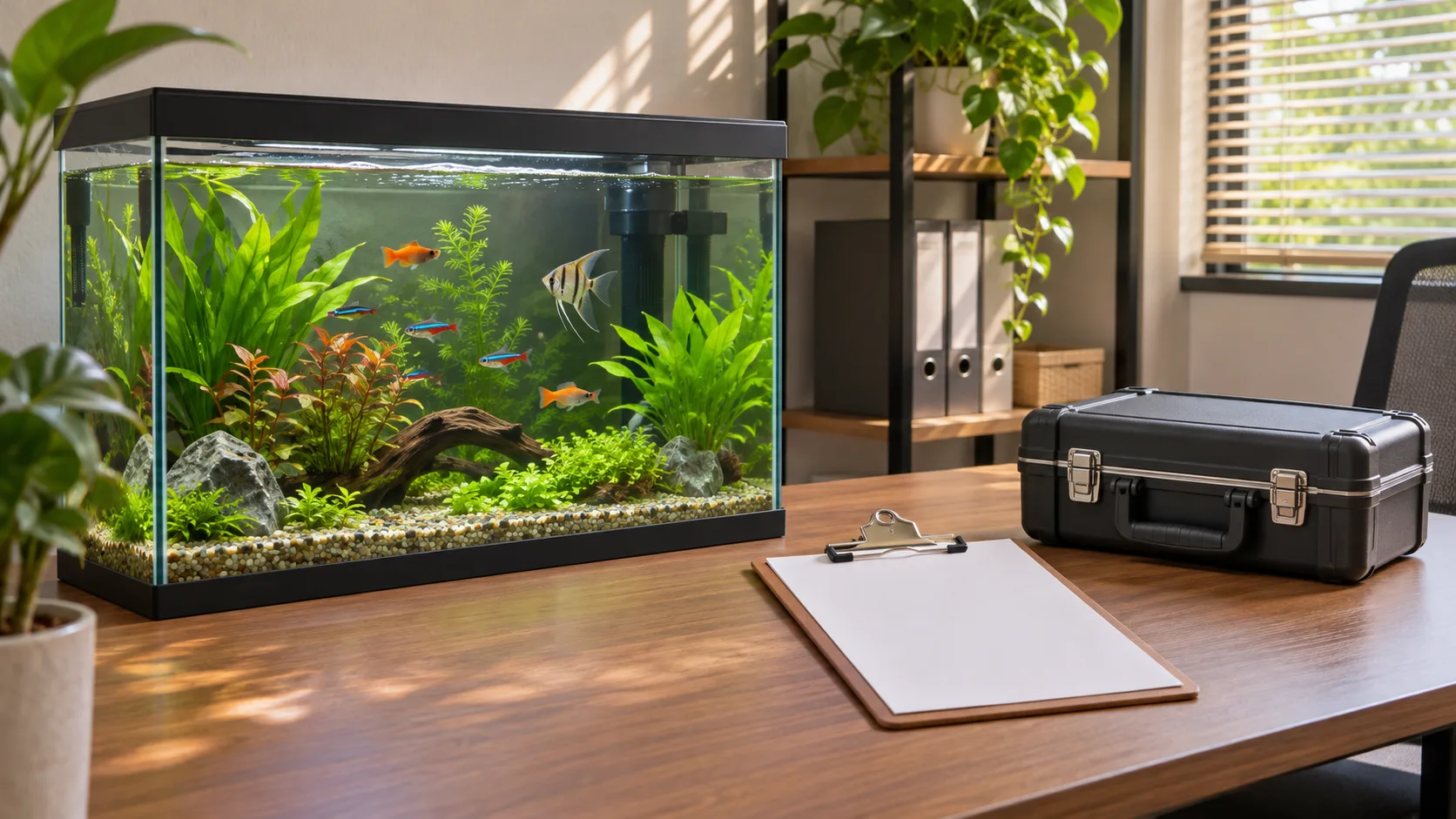
Fictional example: A client asks a provider to visit an office aquarium before a holiday closure. The written scope covers checking access and reporting an unusual equipment noise. The client retains authority over replacement purchases, and both parties identify an alternate contact if the main contact is away. No animal condition or repair outcome is implied by this example.
Confirm timing and responsibility
Agree on the visit window, the fee or quoting process, cancellation terms, and what happens if access is unavailable. Ask when the owner wants the handover report and how it will be delivered. Keep contact information private and share it only as needed for the agreed work.
For another service involving access to someone else’s premises, see the house-sitting arrival record. An aquarium requires its own qualified care plan; a general access checklist is not one.